Stop Using Spreadsheets for Racket Sports Tournaments: The Data-Driven Case for Dedicated Software
Introduction

Spreadsheets are the Swiss Army knife of club management. They're versatile, free, and everyone knows how to use them.
But for tournament management, spreadsheets are the wrong tool. They cause errors, waste time, and create frustration for players and administrators alike.
If you manage a club, you know the pain: bracket calculations take hours, double-entries cause errors, and players complain about unclear schedules.
This guide explains why spreadsheets fail for racket sports tournaments and how dedicated software solves every problem.
The Spreadsheet Problem
Manual Bracket Calculations
The issue: Creating tournament brackets in spreadsheets requires complex formulas, manual data entry, and constant verification.
The data: A 32-player single-elimination bracket takes 2-3 hours to set up manually. A 64-player bracket takes 4-6 hours.
The cost: At $25/hour, that's $50-150 per tournament in administrative time.
Error-Prone Data Entry
The issue: Manual data entry causes errors. Wrong scores, wrong matchups, wrong results. Errors cascade through the bracket.
The data: 15-20% of manually entered tournament brackets contain errors.
The cost: One error per tournament costs 1-2 hours to fix. That's $25-50 in administrative time plus player frustration.
No Real-Time Updates
The issue: Spreadsheets can't update in real-time. Players don't know when matches are scheduled. They don't see results immediately.
The data: 60% of players check tournament brackets on their phones. Spreadsheets aren't mobile-friendly.
The cost: Player frustration, missed matches, and administrative complaints.
No Automated Scheduling
The issue: Scheduling matches requires manual coordination. You check court availability, player preferences, and time constraints manually.
The data: Scheduling a 32-player tournament takes 4-6 hours manually.
The cost: At $25/hour, that's $100-150 per tournament in administrative time.
No Player Communication
The issue: Players don't receive automatic notifications about match schedules, results, or changes. You send emails or messages manually.
The data: 30% of players miss matches because they didn't receive schedule updates.
The cost: One missed match per tournament costs $30-50 in compensation and administrative time.
The Tournament Software Solution
Automated Bracket Generation
How it works: Enter player names. System generates brackets automatically. Seeding, byes, and first-round matches are calculated instantly.
Result: 32-player bracket in 5 minutes instead of 2-3 hours.
How PlayGeko handles it: Single-elimination, double-elimination, round-robin, and Swiss formats. Automatic seeding based on ratings. Manual override when needed.
Real-Time Updates
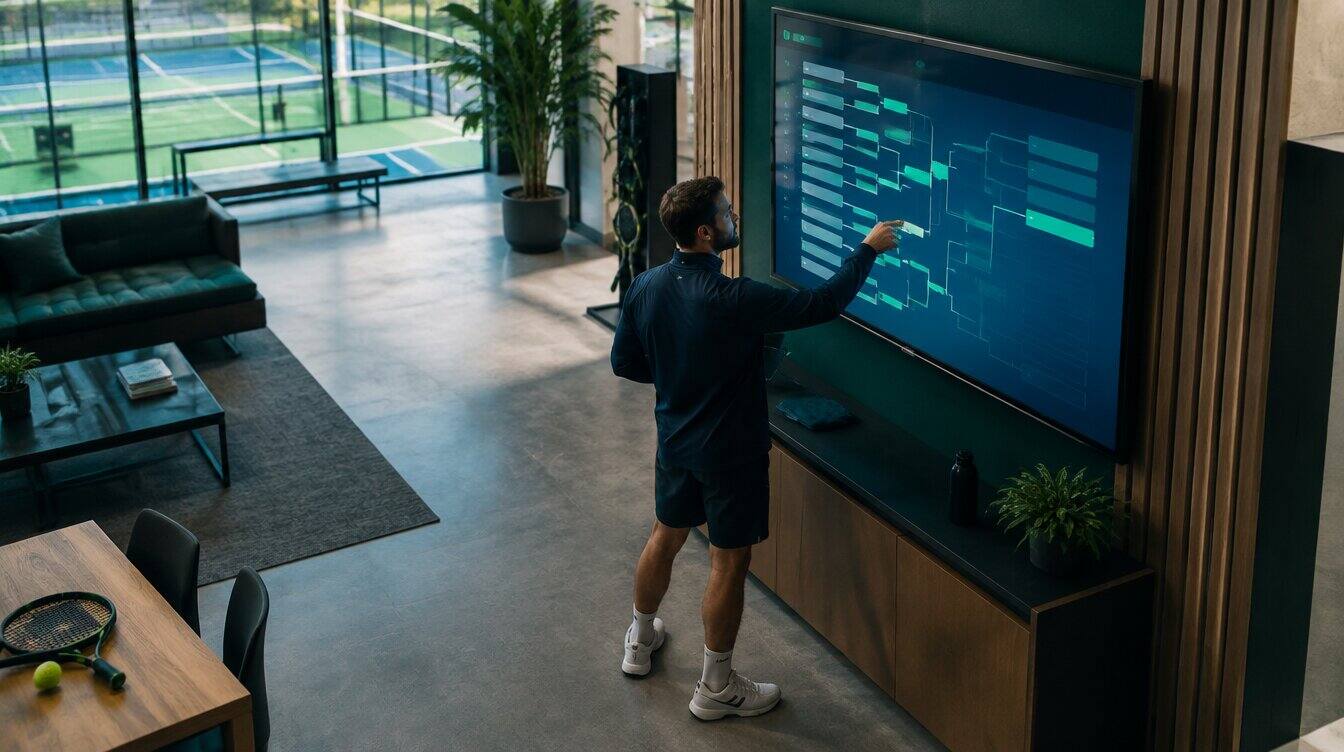
How it works: Results are entered in the app. Bracket updates instantly. Players see changes immediately on their phones.
Result: Zero confusion about match status. Zero missed updates.
How PlayGeko handles it: Live bracket updates. Push notifications for match schedules and results. Mobile-friendly interface.
Automated Scheduling
How it works: System schedules matches based on court availability, player preferences, and time constraints. It optimizes for minimum conflicts and maximum court utilization.
Result: 32-player tournament scheduled in 30 minutes instead of 4-6 hours.
How PlayGeko handles it: Algorithm-based scheduling. Court availability integration. Player preference consideration. Automatic conflict resolution.
Player Communication
How it works: System sends automatic notifications about match schedules, results, and changes. Players receive push notifications, emails, or SMS.
Result: Zero missed matches. Zero manual communication.
How PlayGeko handles it: Multi-channel notifications (push, email, SMS). Customizable notification preferences. Automatic schedule reminders.
Score Tracking
How it works: Players or referees enter scores in the app. System calculates results, updates brackets, and tracks statistics.
Result: Accurate results, automatic bracket updates, and comprehensive statistics.
How PlayGeko handles it: In-app score entry. Automatic result calculation. Live statistics. Historical data tracking.
Sport-Specific Tournament Formats
Padel Tournaments
Common formats: Single-elimination, double-elimination, round-robin.
Special considerations: Partnership changes between rounds. Rating-based seeding. Floodlit court scheduling.
How PlayGeko handles it: Partnership tracking for padel tournaments. Rating-based seeding. Floodlit court integration.
Tennis Tournaments
Common formats: Single-elimination, round-robin, Swiss.
Special considerations: Surface-specific courts. NTRP rating integration. Weather-dependent scheduling.
How PlayGeko handles it: Surface-specific scheduling. NTRP rating integration. Weather-aware rescheduling.
Pickleball Tournaments
Common formats: Single-elimination, double-elimination, round-robin.
Special considerations: DUPR rating integration. Singles/doubles/mixed formats. Weather-dependent scheduling for outdoor courts.
How PlayGeko handles it: DUPR-compatible ratings. Multi-format support. Weather-aware scheduling.
Squash Tournaments
Common formats: Single-elimination, box league, ladder.
Special considerations: Court quality differences. League integration. Box league scheduling.
How PlayGeko handles it: Court quality tracking. League integration. Box league management.
Table Tennis Tournaments
Common formats: Single-elimination, round-robin, group stage + knockout.
Special considerations: Multi-table events. Equipment rental tracking. Tournament ranking integration.
How PlayGeko handles it: Multi-table scheduling. Equipment tracking. Ranking integration.
Badminton Tournaments
Common formats: Single-elimination, double-elimination, round-robin.
Special considerations: Singles/doubles/mixed formats. Shuttlecock tracking. Court surface integration.
How PlayGeko handles it: Multi-format support. Equipment tracking. Court surface scheduling.
Beach Tennis Tournaments
Common formats: Single-elimination, round-robin.
Special considerations: Weather-dependent scheduling. Seasonal court availability. Equipment rental.
How PlayGeko handles it: Weather-aware scheduling. Seasonal management. Equipment tracking.
The Time Savings
Here's what tournament software eliminates from your tournament management:
| Task | Spreadsheet Time | Software Time | Savings |
|---|---|---|---|
| Bracket creation | 2-3 hours | 5 minutes | 1.9 hours |
| Match scheduling | 4-6 hours | 30 minutes | 4.5 hours |
| Score tracking | 1 hour | 5 minutes | 55 minutes |
| Player communication | 2 hours | 0 hours | 2 hours |
| Bracket updates | 1 hour | 0 hours | 1 hour |
| Total | 9-12 hours | 40 minutes | 8.5 hours |
At $25/hour, that's $212 per tournament in administrative savings.
The Revenue Impact
More Tournaments
Before spreadsheets: 1 tournament/month After software: 2 tournaments/month
Additional tournament revenue: $1,200/month
Higher Participation
Before spreadsheets: 24 players/tournament After software: 32 players/tournament
Additional entry fees: $640/tournament
Reduced Errors
Before spreadsheets: 2 errors/tournament After software: 0 errors/tournament
Time saved: 4 hours/tournament
Total ROI
Annual savings: $2,544 (administrative time) Annual revenue increase: $17,280 (more tournaments + participation) Total annual benefit: $19,824
ROI of PlayGeko Professional ($94/month): - Investment: $1,128/year - Benefit: $19,824/year - ROI: 1,657%
Migration Guide
Step 1: Export Your Data (30 minutes)
Export player lists, tournament history, and results from spreadsheets.
Step 2: Set Up Your Account (1 hour)
Import player data. Configure tournament formats. Set up court schedules.
Step 3: Run Your First Tournament (2 hours)
Create a test tournament. Import players. Generate brackets. Schedule matches.
Step 4: Go Live (15 minutes)
Announce the switch. Use the new system for your next tournament.
Total migration time: 4 hours.
Frequently Asked Questions
Will players resist the change?
Some will. Most won't. Players who participate in tournaments will appreciate the convenience. Players who don't will adapt quickly.
What about players without smartphones?
Tournament software has a web version. Players can access brackets through any browser. You can also print brackets for players who prefer paper.
How do I handle the transition period?
Run both systems for one tournament. Use the new system for the next tournament. After two tournaments, stop using spreadsheets.
What if I have a large player base?
Tournament software can import hundreds of players at once. The migration is the same whether you have 32 or 320 players.
Is the investment worth it?
For a club running 2 tournaments/month, the ROI is 1,657%. The math is that clear.
Related articles

How to Reduce No-Shows at Your Sports Club (Without Chasing Players)
WhatsApp vs Booking Software: Why Racket Sports Clubs Need to Upgrade .